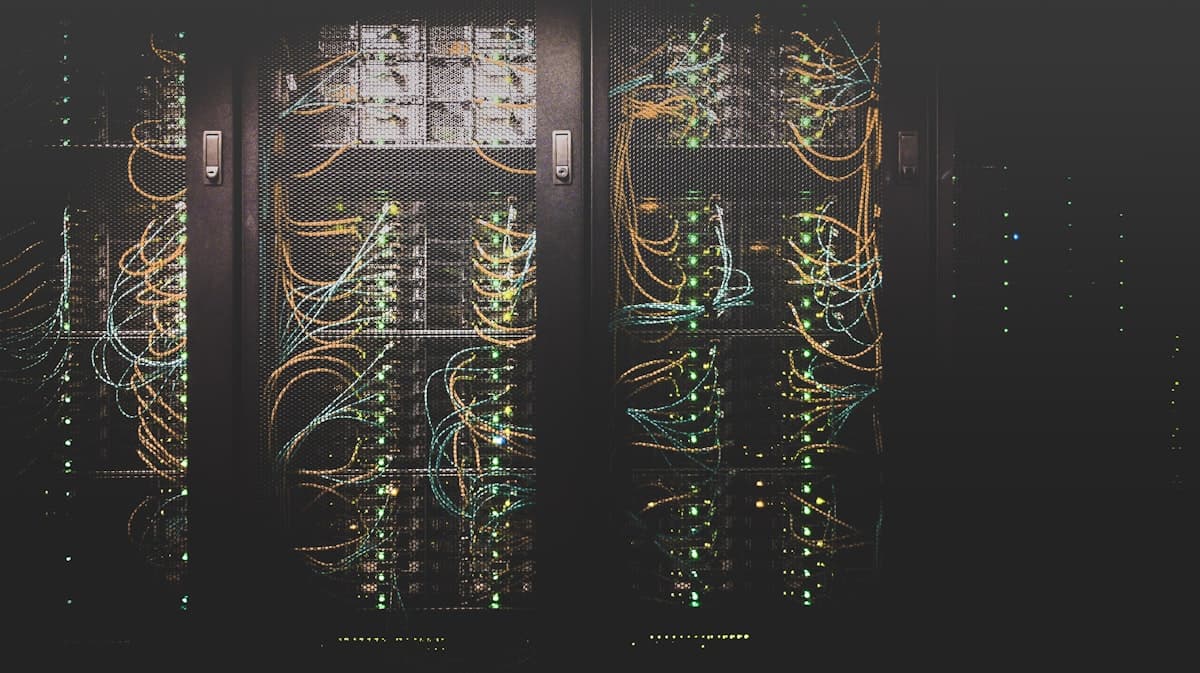
The AI Infrastructure Race: Why Capital Is Shifting from Models to Compute
Key Takeaways
The next phase of the AI boom is shifting from applications to infrastructure: compute, data centers and semiconductor capacity.
Demand for advanced AI chips and compute clusters is accelerating as companies race to build and deploy increasingly powerful models.
Governments, sovereign wealth funds and hyperscale technology companies are investing heavily to secure strategic control over AI infrastructure.
In the AI economy, compute is becoming as strategic as oil once was.
Context
The rapid progress of generative AI over the past two years has triggered a wave of investment across the technology sector. Major technology companies have committed unprecedented capital to AI development. According to company disclosures and market estimates, global spending on AI infrastructure is expected to reach hundreds of billions of dollars over the coming decade. The scale of compute required to train and operate advanced AI models has become one of the defining constraints of the industry.
Market Reaction
Investors initially focused on companies building large language models and AI applications. However, attention has increasingly shifted toward the infrastructure that enables these systems. Data center developers, semiconductor manufacturers and cloud infrastructure providers have experienced surging demand. Companies such as NVIDIA have seen extraordinary growth driven by demand for AI training hardware. At the same time, governments and sovereign investors have begun investing in national or regional AI infrastructure, recognizing that access to compute capacity may become a strategic advantage.
Structural Drivers
The infrastructure race is being driven by several structural forces. First, training advanced AI models requires enormous computational resources. State-of-the-art models are trained using thousands of specialized GPUs running for weeks or months. Second, the adoption of AI across industries is expected to increase dramatically over the coming decade, creating sustained demand for data centers and compute infrastructure. Third, geopolitical considerations are increasingly influencing technology supply chains. Governments are investing in domestic semiconductor capacity and AI infrastructure to ensure technological competitiveness.
Historical Perspective
Technology infrastructure cycles often follow similar patterns. Early phases of innovation focus on software breakthroughs, while later phases require massive investment in physical infrastructure. The development of the internet offers a comparable example. Initial innovation centered on software protocols and applications, but long-term growth required enormous investment in fiber networks, data centers and global connectivity. AI appears to be entering a similar phase.
Investor Outlook
For investors, the infrastructure layer of the AI ecosystem may represent one of the most durable investment opportunities. While individual AI applications may rise and fall quickly, the demand for compute, data infrastructure and semiconductor capacity is likely to grow steadily as AI adoption expands. This dynamic is already attracting significant investment from sovereign wealth funds, private equity investors and large technology companies.
Conclusion
Artificial intelligence is often discussed as a software revolution, but its economic impact will also be defined by infrastructure. As AI systems scale, the companies and regions that control compute capacity, data infrastructure and semiconductor supply chains will play an increasingly important role in shaping the global technology landscape.
Closing Insight
“In the emerging AI economy, access to compute may become as strategically important as access to energy resources was in the industrial age.”
Endnotes
- The State of AI in 2024: Generative AI's Breakout Year, McKinsey & Company, 2024.
- AI Index Report 2024, Stanford Institute for Human-Centered Artificial Intelligence (HAI).
- The AI Infrastructure Buildout: Hyperscalers and the New Compute Economy, Morgan Stanley Research, 2024.
- Global Semiconductor Industry Outlook, Deloitte Insights, 2024.
- NVIDIA Data Center Platform and Accelerated Computing Strategy, NVIDIA Investor Presentations, 2024.
Related Advisory Services